Scroll sideways to compare all columns →
| Material example | What is different | What to check on your job |
|---|---|---|
| Semi-gloss paper · hot-melt · white glassine | 80 g/m² paper / hot-melt / 54 g/m² white glassine | Printed finish, attachment on the pack and exposure during use. |
| Transparent BOPP · acrylic emulsion · PET liner | 50 µm coated film / acrylic emulsion / 30 µm transparent PET liner | Clarity after application, ink adhesion and label dispensing. |
| Matte-silver PET · acrylic emulsion · white glassine | 50 µm nominal film / acrylic emulsion / 60 g/m² nominal white glassine | Printed colour on the silver face, image readability and exposure. |
Begin with the surface and the finished appearance
Write down the container material, coating, shape and surface condition at labelling. A paper face and a clear film give different appearances, but neither description tells you whether the adhesive will hold on a particular bottle. For a transparent label, look at the printed sample on a filled container: the face, adhesive and background all contribute to what the customer sees.
- Say whether you want an opaque white, transparent or metallic-looking label.
- Include squeezing, flexing, moisture and handling in the sample brief.
- Distinguish a rough carton from smooth glass, painted metal or a specific plastic.
Choose attachment and removal separately from the face
Permanent attachment, freezer use and planned removal are different questions. Two documented options use 50 µm coated transparent BOPP and 60 g/m² white glassine, but one has freezer-grade hot-melt and the other removable acrylic adhesive. Swapping them on appearance alone would miss the reason for selecting the construction.
- For cold-chain work, state the surface temperature at application and the later storage cycle separately.
- For removable labels, specify how long they stay on and what residue or surface change is acceptable.
- Keep an existing label as a comparison, including any known failure.
Do not leave the liner until the end
The liner is removed in use, but it is part of printing, die-cutting and dispensing. A paper liner and a PET release film are not interchangeable simply because the label face is the same. Give the converter the complete construction and agree how the trial will run on the intended equipment.
- Record liner material and nominal weight or thickness.
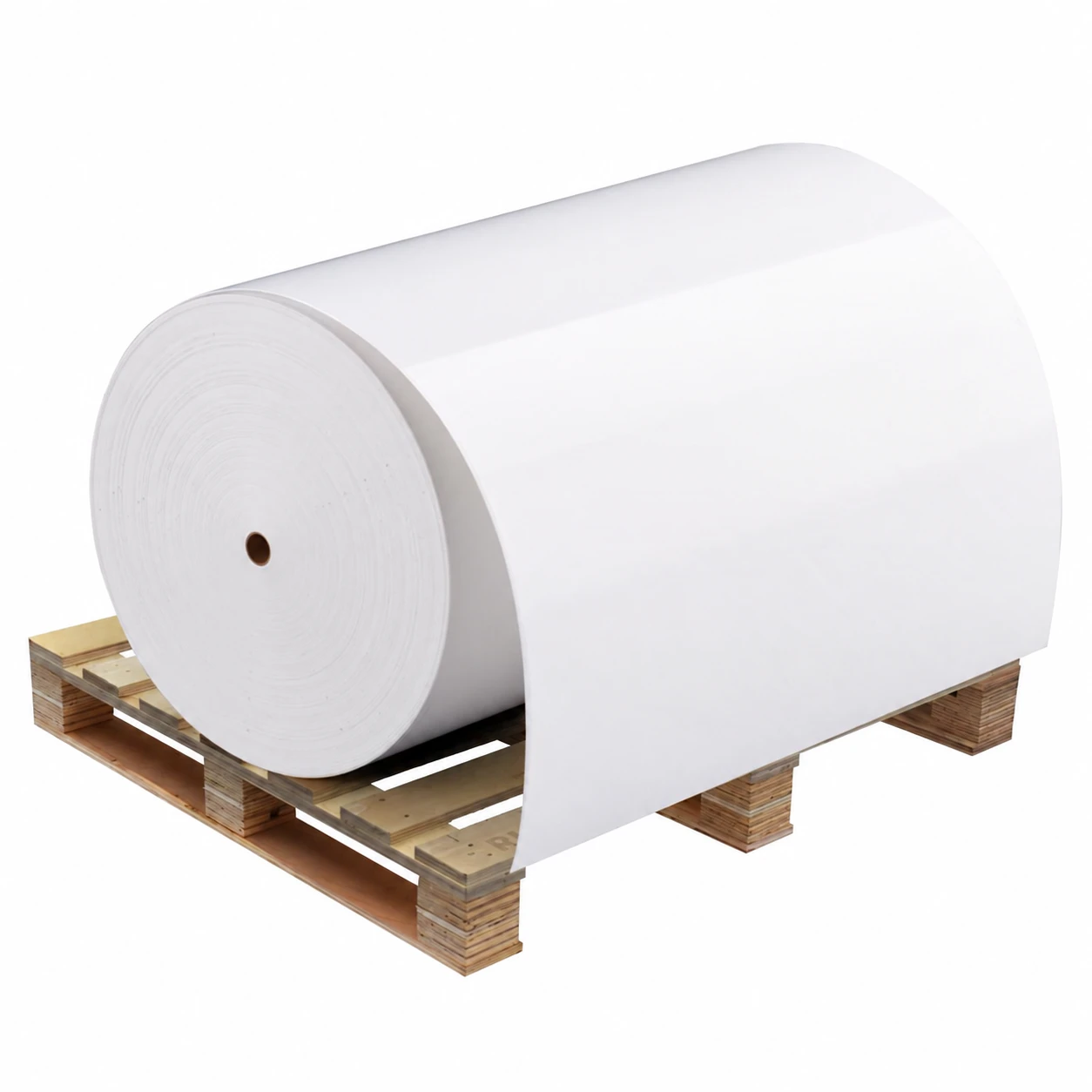
- Confirm web width, core, winding and roll outside diameter with the converting team.
- Observe release, matrix removal, web handling and the condition of the liner after die-cutting.
Make the shortlist testable
Choose a small set of documented constructions and compare them under the same conditions. Keep label size, artwork, application method and observation times consistent. A face-weight number describes the material; it does not establish durability, adhesion or a service-temperature limit. Those answers need the current specification and a job-specific trial.
- Compare paper and film families first, then narrow adhesive and liner options.
- Link each sample and observation to a model and batch where available.
- Send the failed sample or a close photograph of the failure, not only a request for a stronger label.
Sources and scope
Model examples use the linked RT construction records. The checklist is a proposed observation plan, not a report of completed tests. Confirm the current grade and specification before a trial.